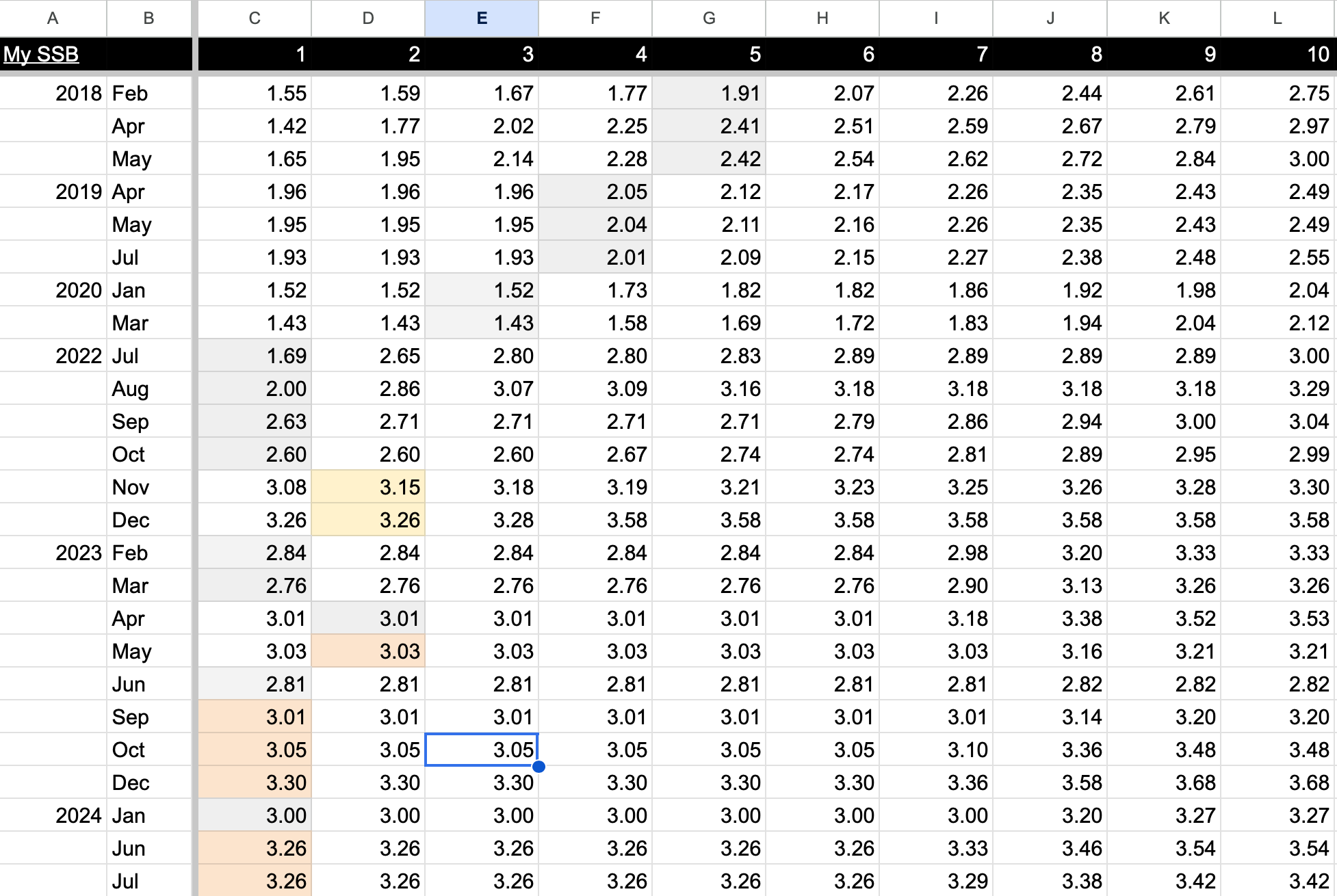
I have a Google Sheet just for Singapore Savings Bonds.
Every month, I add the latest issue and copy its interest rates across all 10 years. It lets me compare one issue against another and see whether rates are moving up, down, or mostly nowhere.
The spreadsheet works. But honestly, I shouldn’t need one.
The MAS website has the information, but I still struggle to find older issues, compare them, or understand the current issue at a glance. I’m pretty savvy with spreadsheets and financial products, and I still find it unfriendly.
So we made SSB.
The question behind the rates
A table of percentages doesn’t answer the question most of us actually have:
If I invest this amount, how much interest will I receive?
There’s the first-year coupon, the tenth-year coupon and the average annual return. They’re related, but they don’t mean the same thing. Even the first coupon payment can be less obvious when its coupon period isn’t a neat six months.
SSB puts those details together. Enter your investment amount and it calculates the estimated first coupon payment, payment date and average yearly cash interest over the full 10 years.
No extra spreadsheet formulas required. Mine has suffered enough.
Why I like SSBs so much
I honestly think Singapore Savings Bonds are one of the best savings tools the Singapore government has introduced.
Depending on the month and the account you’re comparing it with, an SSB may offer a better rate than an ordinary savings account. Unlike many bonus-interest bank accounts, that rate isn’t tied to salary crediting, card spending or completing monthly transactions.
You buy the bond. You earn the published interest.
And your money isn’t locked away for 10 years. You can redeem in any month, and MAS pays your principal plus accrued interest by the end of the second business day of the following month. The usual bank transaction fee applies.
That isn’t the same as cash being instantly available in a savings account. But for money I probably won’t need tomorrow, it’s liquid enough for me.
The official MAS FAQ explains the redemption process and accrued interest.
It won’t suit every situation, and this isn’t investment advice. But I think more Singapore savers should understand what SSBs offer.
Everything in one place
SSB opens with the latest published issue. You can see whether applications are open, when they close, when results will be announced, and when the bond starts earning interest.
The first-year coupon, tenth-year coupon and official 10-year average return sit together at the top. Below them are the full rate chart, table and coupon calculator.
The chart shows how the coupon rate changes across all 10 years, alongside the average annual return if you redeem in each year. The table puts the same numbers together with the interest for the amount you entered.
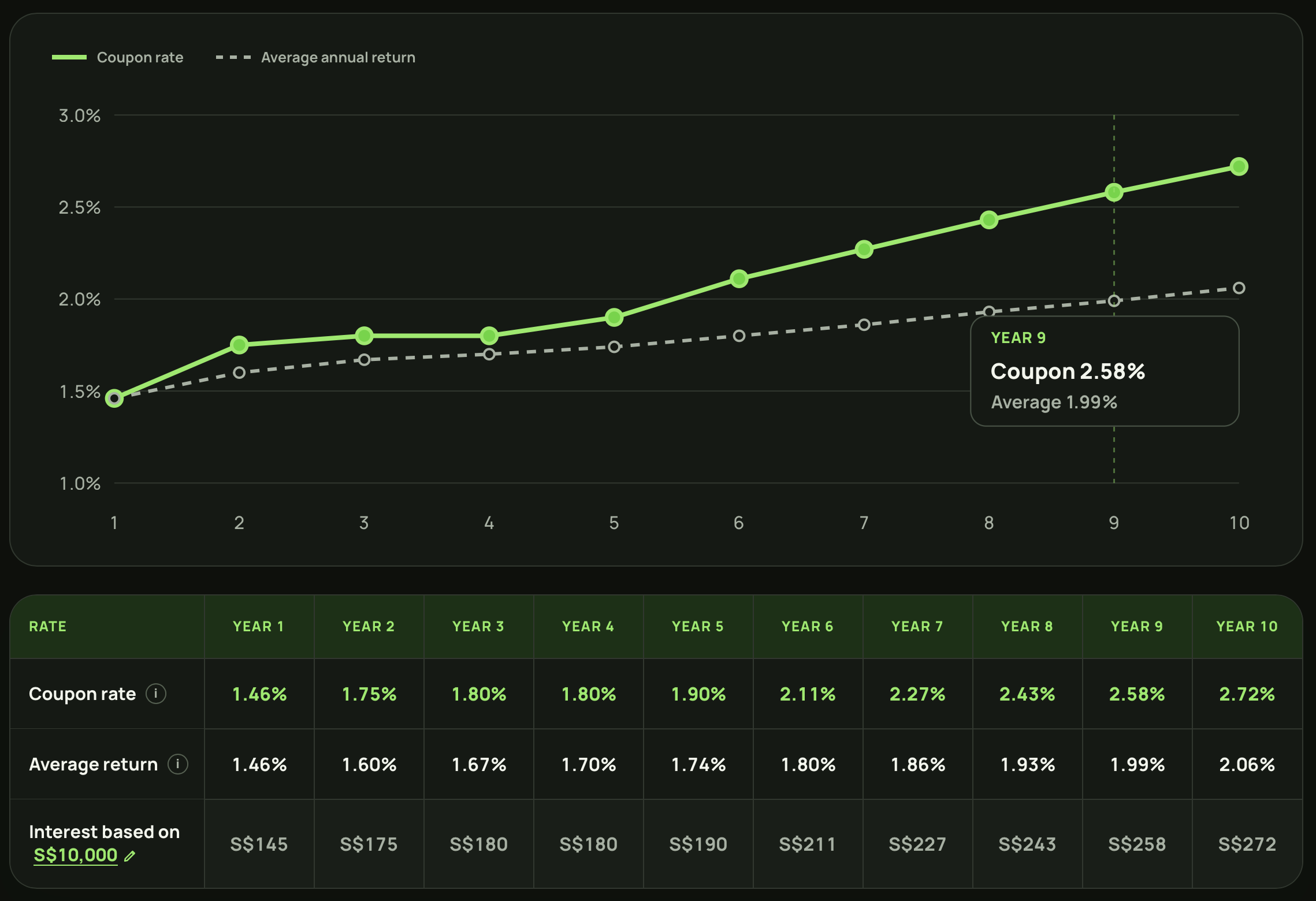
You can also browse previous issues by year instead of digging through old announcements. Upcoming bonds appear too, and when MAS hasn’t announced their rates, we simply say so.
Behind the page is a data pipeline that imports official MAS information, normalises it and checks it before publishing.
A very niche problem
This is a small website for a very specific Singapore problem.
But it’s a problem I run into every month, and I doubt I’m the only person maintaining a spreadsheet just to make sense of it all.
Try SSB. Put in an amount, browse a few months and see what the rates actually mean for you.
My spreadsheet can finally become optional.
Comments